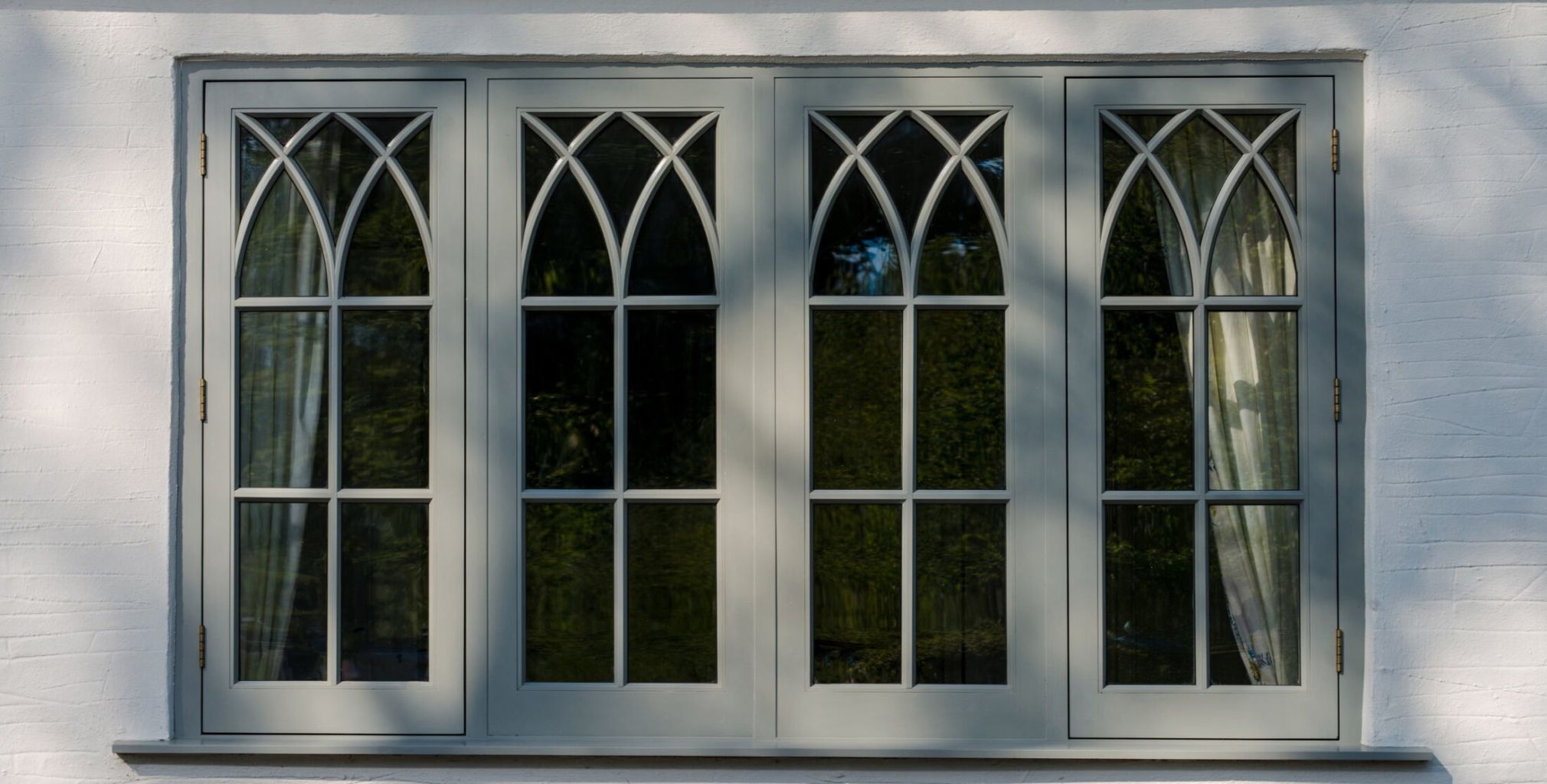
Bespoke Accoya Windows
Everything You Need To Know About Accoya Windows
Whether your home has a modern architectural style or classic period charm, you’ll already know how important it is to achieve the right aesthetic, inside and out. From a Grade II listed or heritage property to a 21st-century new build eco-home, preserving or creating its character comes down to using the right materials. And Accoya® windows can be one of many essential attributes that define their appearance.
Whether a traditional or contemporary home, modern uPVC window frames can’t begin to match the classic timelessness of natural timber. And, with current concerns over rising energy costs, sustainability, and planning restrictions, sustainably-sourced Accoya wood is the timber of choice for our bespoke timber windows.
Used whenever possible for sash or casement window projects, it gives every home a beautiful finish when its cutting-edge eco-technology is combined with our traditional craftsmanship. But while Accoya may not be a wood you’ve heard of or know too much about, this guide explains why Accoya is still our preferred choice for both heritage and contemporary homes and homes in conservation areas.
What is Accoya wood?
Being on the market since 2007, Accoya is now the world’s leading high-tech, high-performance, eco-friendly wood. Made from FSC® sustainably-sourced, fast-growing softwood, Accoya goes through a chemical process to give it exceptional capabilities while staying non-toxic and 100% recyclable.
Accoya’s durability also means it maintains its performance for over 50 years above ground and 25 years in ground or freshwater. Accoya also holds the highest level of certification of Cradle-To-Cradle® Gold. This global standard verifies that products are safe, sustainable, and responsibly made.
It’s these qualities that make Accoya a next-generation wood, which is why it’s the preferred material for our windows and doors.
Is Accoya wood a hardwood or softwood?
Accoya is classed as a softwood. It’s harvested from fast-growing and sustainably-sourced softwoods, then modified through a patented ‘surface to core’ wood acetylation process. This converts the softwood into timber that has all the properties of hardwood, but greatly improved, helping it stay strong and stable for decades. Even after this process, Accoya is still classed as a softwood.
While conventional timbers like oak, pine, and tropical hardwoods are among the most common materials for windows, it doesn’t always mean they’re the best. These wood types will always have a place in window manufacturing, but there are several downsides to them.
Because of natural wood’s penetrable nature, it’s generally not stable enough for long-term use without regular maintenance and even replacement. Plus, it’s not a sustainable or environmentally friendly use of materials either. This is where Accoya is different.
How does Accoya wood work?
The physical properties of any material are decided by a predetermined chemical formation, and wood is no different. Full of chemical groups called ‘free hydroxyls’, these groups absorb and release water depending on the wood’s environment and what it’s exposed to. This is why wood is able to swell when wet and shrink when dry.
For Accoya, all those ‘free hydroxyl’ groups are changed to ‘acetyl groups’ by applying cutting-edge technology and a proven wood modification process called ‘acetylation’. Through this process, the chemical structure of the wood is altered so it loses the ability to absorb water and becomes an environmentally safe, stable wood.
Though it’s all very scientific, the process itself is straightforward. And as a result, its superior performance and outstanding resilience in extreme temperatures and waterside installations mean it exceeds even the finest tropical hardwoods. And that’s why Accoya windows are better than normal hardwood windows.
How long does Accoya wood last?
While it can be sustainably grown in 25 years, the modified attributes of Accoya wood help it achieve an exceptional lifespan. The wood has an extensive warranty of 50 years above ground and 25 years in ground or in freshwater, wherever it’s used in application.

Alongside long-term peace of mind for any installations using Accoya, its lifespan goes a long way towards improving low-carbon potential and reducing lifetime material consumption compared to other materials. And it’s low maintenance, so that means a longer coating lifespan and less repainting or repairing, which gives you long-term cost savings.
The real benefits of Accoya wood windows
With extensive lab and field testing by leading institutes around the world, results have proven acetylated wood to be extremely reliable. Accoya wood is carefully tested for dimensional stability, durability, UV resistance, paint retention, and in-ground and below-ground conditions to deliver exceptional results in every situation.
So what does this all mean for you when you choose Accoya timber for your windows? We’ve put together a handy features guide that highlights the everyday benefits of having Accoya windows installed in your home.
Durability
While some woods can be labelled as ‘naturally durable and stable’, this can be a variable and inconsistent feature. But the extreme durability of Accoya is rated as Class 1 – the highest level of durability according to EN 350-1 European standards.
That makes Accoya windows long-lasting with the ability to withstand the most demanding weather environments without replacement – even with no protective coating. Accoya is also resistant to mould, insect, and termite attack, so it’s virtually rot-proof. And all this is covered in the 50-year above-ground and 25-year in-ground and freshwater warranty.
Stability
This is the level to which wood can maintain its original size and shape over long periods when exposed to changing weather conditions. Other woods swell in wet or damp settings and shrink in hot environments, but Accoya has unrivalled stability. Being fully tested, Accoya has incredible resistance and is trusted to have minimal movement, so no swelling, shrinkage, distortion, or even UV degradation.
And thanks to its improved hardness, you can say goodbye to window frames that warp, stick, or jam or split and rot – a huge benefit for casement windows or, especially, traditionally authentic wooden sliding sash windows.
Sustainability
All Accoya wood comes from well-managed FSC®, PEFC, and other sustainable sources. This helps achieve a low environmental impact and makes it CO2 negative over the wood’s full life cycle. Together with a minimum waste and long-life approach, Accoya has gained Platinum status for Material Health through the Cradle-To-Cradle® certification process, meaning the wood conforms to sustainability standards.
Thanks to its superior natural thermal insulation, Accoya has overwhelming environmental advantages over standard, slow-growing woods and non-renewable materials such as aluminium. Accoya is also completely non-toxic, reusable, and 100% recyclable. That means any offcuts that we have leftover from projects can be upcycled and repurposed into modified wood timber Tricoya boards made by Accoya.
Our extensive use of Accoya goes a long way to keeping our carbon footprint as low as possible, and the material is a hugely important factor to us in the current climate emergency, as we do as much as we can to be an environmentally forward-thinking company.
Maintainability
Thanks to the superior combination of Accoya’s durable and stable qualities, the maintenance required on your windows is drastically reduced. With swelling and shrinkage decreased by 70-80%, the wood has a more stable surface for longer, ensuring an improved retention for RAL paint colour and other stains or coatings.
So, that’s less time on maintenance and less money spent on paint or coatings, saving you time and money for many years. And being so low-maintenance means it’s better for the environment and has a less negative impact.
Energy efficiency
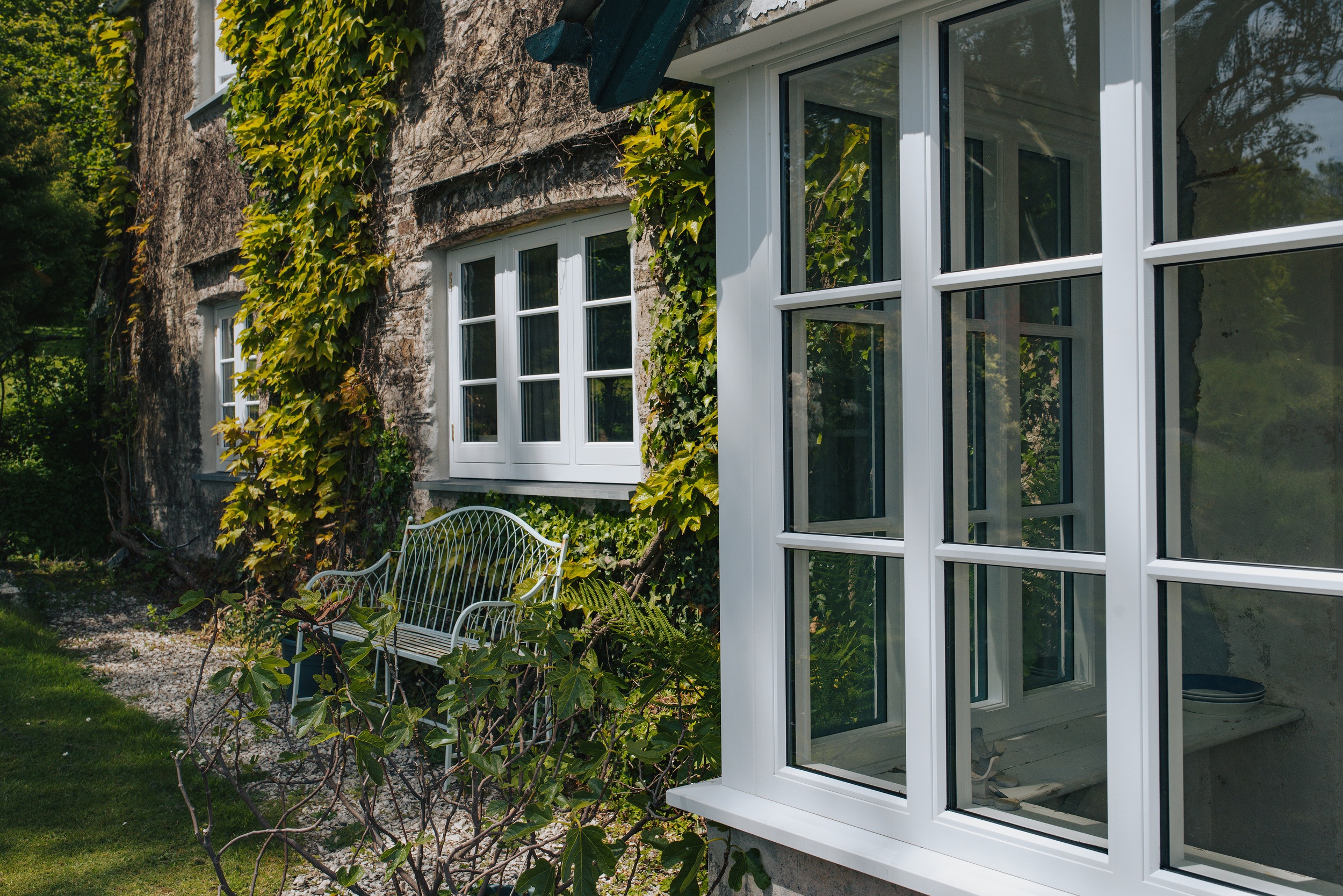
While Accoya wood looks beautiful for all window types, it also delivers exceptional thermal performance to help reduce heat loss and keep homes warmer in winter and cooler in summer – and that’s definitely something to consider when energy prices are always on the rise. This performance makes it a better choice for window replacements, especially for double-glazed units in period or conservation properties.
Because Accoya insulates better than softwoods and up to 30% better than hardwoods, it’s an outstanding material that meets the standards set out in Part L of the UK Building Regulations regarding energy efficiency for properties, including passivhaus projects. Coming into force in June 2022, these latest regs lay out the minimum standards for insulation to help reach net zero targets.
Can Accoya be used in conservation areas?
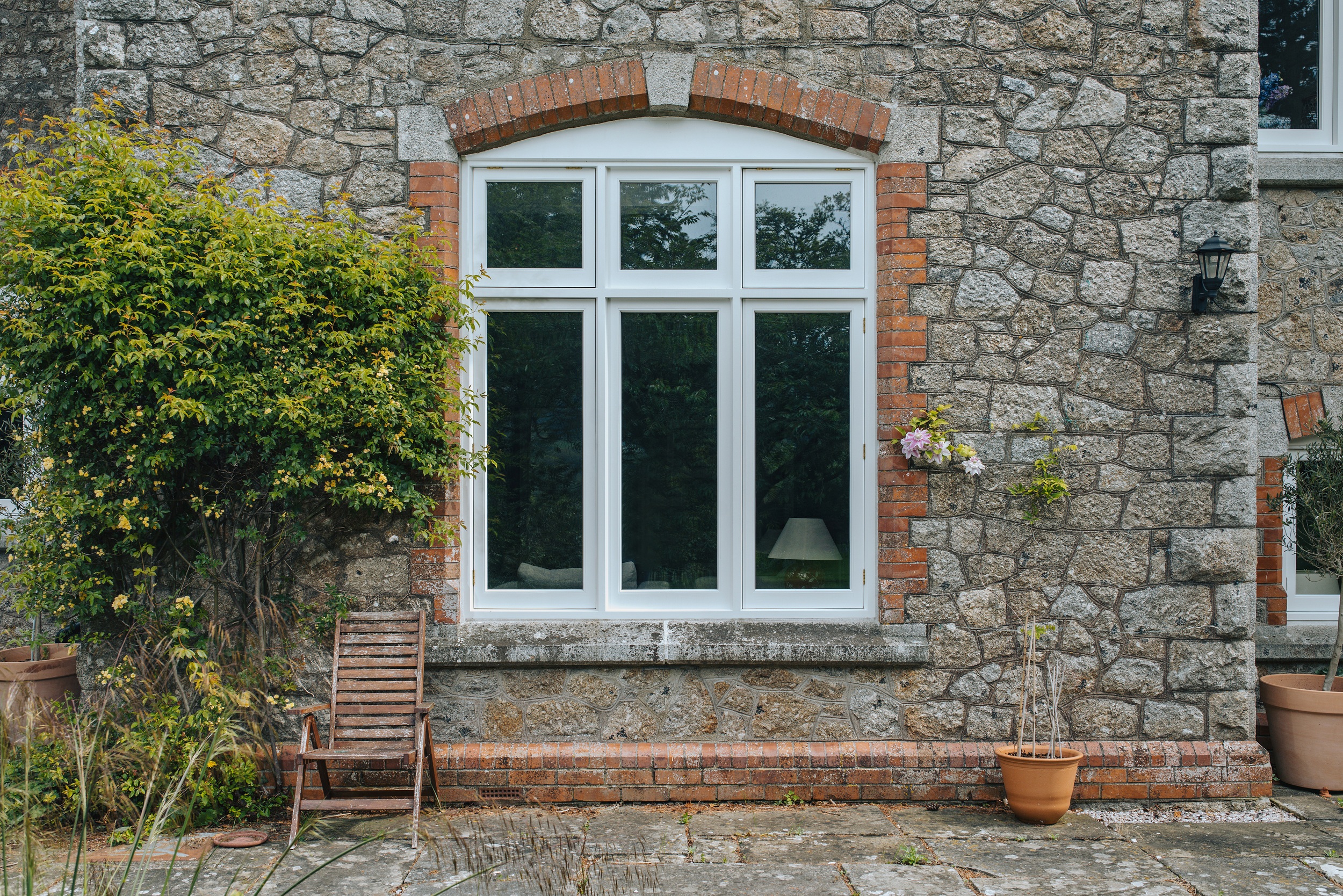
Accoya is an ideal timber to use on heritage properties in conservation areas. There have been some concerns about its suitability and potential reactions with certain metals or surrounding natural materials. But, we can say these concerns are unfounded. They come from misunderstandings about Accoya’s modification process, so it can definitely be used.
The acetylation process used in creating Accoya is carefully controlled, with residual acetic acid levels closely monitored to make sure the timber remains non-corrosive and non-reactive when in use. With a pH of around 4.0-5.5, Accoya actually has a similar acidic level to many traditional and commonly used timbers, such as oak or western red cedar.
Accoya has been successfully used in the UK since 2007 and is now widely specified for conservation and heritage projects across the country. When correctly installed, Accoya is of no risk to metals or masonry. Instead, it provides superior stability, durability, and sustainability, so heritage properties are protected with a material that performs better, lasts longer, and preserves their character.
Accoya windows from Nathan McCarter Joinery
Accoya wood is the result of more than 80 years’ research and development. Bringing together a proven wood modification process and cutting-edge technology, it creates a new type of wood that’s an environmentally and architecturally sound choice, used for both windows and doors.
Being a name synonymous with experience and handcrafted quality, Nathan McCarter Joinery demonstrates local expertise, craftsmanship, and sustainability in all our Accoya sash and casement windows, each combining all the character and performance you need to give your home the finish it deserves.
For more information, help, or advice on Accoya and our range of bespoke doors and windows, or to arrange a visit to our Tavistock workshop, call NMJ today on 01822 615 010, email us at hello@nmjoinery.com, or send us a message to get started.